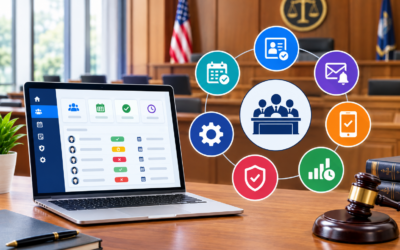
The management of jury compliance is more than just good recordkeeping. Courts need to manage sensitive information abouzt jurors, provide necessary instructions, monitor participation and keep records. When considering Jury compliance software, it’s helpful to see how a solution manages these responsibilities in the day-to-day operations of the court.
JuryQ provides technology to help create a more organized digital interaction between courts and jurors.
What Should Courts Look For?
Instead of judging a platform based on the number of features it provides, courts can compare the capabilities of the platform to their actual administrative needs.
| Court requirement | What the software should provide | Why it matters |
| Accurate juror records | Centralized information management | Helps reduce duplicate or inconsistent records |
| Controlled access | User permissions and authentication | Helps protect sensitive information |
| Documented activity | Audit trails and activity history | Makes important actions easier to review |
| Timely communication | Automated notifications and reminders | Helps jurors receive important information on time |
| Participation tracking | Attendance and status monitoring | Gives staff better visibility into juror activity |
| Useful reporting | Customizable or accessible reports | Supports administrative review and decision-making |
| Data security | Appropriate security controls | Helps protect personal and court information |
| Connected workflows | Integration capabilities | Can reduce duplicate data entry |
Security Should Come First
Jury records may contain personal information, so security should take precedence over convenience or visual design.
Courts have to understand how a potential platform will manage user access and protect the data it stores. Access control, permissions and other security measures can help make sure that sensitive records are only accessible to authorized staff.
A secure system should also facilitate the responsible handling of information over its life cycle.
An Audit Trail Can Make a Difference
Compliance is often tied to being able to tell what happened and when.
A good system should make it easier to follow what matters. For authorized staff, it may be helpful to have a record of any updates to a record, any communication that is sent or any specific administrative action that is completed.
This is particularly useful when jurors need to return to the information later..
Communication Is Part of Compliance
Even with good records, a court can face administrative troubles if jurors don’t get important information at the right time.
Automated reminders and digital notifications can reduce the amount of manual follow-up that staff need to do. Communications may include reporting instructions, schedule changes, deadlines or other jury service requirements, depending on the system.
It’s not just about sending more messages — it’s about making sure jurors receive and understand important information.
Reporting Should Help People Make Decisions
Reports are useful if they answer practical questions.
Court administrators may need to consider participation, attendance, responses or other information about jury service. A Jury management system that makes this information available can help staff to see what tasks are outstanding and track the overall process.
In assessing reporting capabilities, courts should look at whether the information available can actually support their day-to-day work.
Consider the Juror’s Side Too
Compliance should not complicate jury service more than necessary.
Jurors need to know what they are supposed to do, when they are supposed to respond and where they can find relevant information. A complex digital process may not ease the workload, but instead generate more questions for court staff.
So a simple interface and straightforward communication could be a good thing for the court and for the juror.
Conclusion
The right Jury compliance software should support the entire compliance process, not just solve a single administrative task. Security, record management, communication, reporting, auditability and ease of use are all worthy considerations before a court makes its choice.
JuryQ is a technology company dedicated to developing a more connected experience for courts and jurors. Courts can assess available features against current operational needs to identify a Jury management system that facilitates effective administration while providing a clear and manageable juror experience.