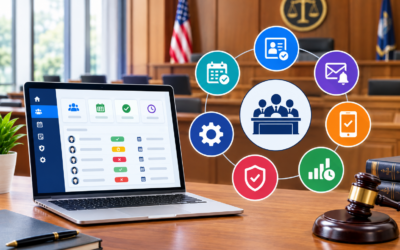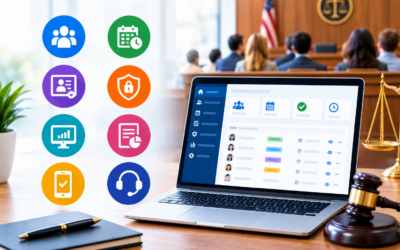
Administering jury service is about much more than sending out notices and taking attendance. Courts need to integrate juror information, scheduling, communication, payments and compliance, while keeping sensitive information confidential. So when evaluating Jury Software, courts should search for a solution that supports the entire jury administration process and not just a piece of it.
At JuryQ, our technology is designed to bridge the gap between the court administration and the juror experience, simplifying the management and navigation of critical processes.
1. Easy Juror Registration
Your first experience of a jury system should be straightforward. Digital registration can allow prospective jurors to provide required information without relying solely on paper forms or manual data entry.
A straightforward registration process can also reduce incomplete submissions and make it easier for court staff to organize juror records.
2. Convenient Mobile Access
Jurors may have to find information outside of a computer. With a mobile-friendly system, they can review instructions, check schedules, get updates and complete necessary tasks from a smartphone.
This interaction can be made even more convenient with a dedicated Jury Duty App that has the key jury service information in one place.
3. Automated Notifications
Court calendars change and jurors must be notified promptly when they do.
Automated notifications can help courts share reporting instructions, schedule changes, reminders and other important updates without requiring staff to contact each juror individually.
4. Digital Check-In
Queues and extra administration can result from the traditional check-in process.
Digital check-in offers courts the chance to streamline how jurors arrive and to keep an organized record of their participation. Depending on the system, check-in can be done through a mobile device, QR code or other digital means.
5. Real-Time Juror Tracking
Court staff must know the jurors’ locations in the service process.
A modern platform should allow for tracking of responses, attendance, availability, scheduling information and any other relevant status information. Centralized information can help reduce the need for separate spreadsheets and manual records.
6. Secure Information Management
Protection of personal information is necessary for jury administration.
Security measures such as access control, authentication, encryption and others can help protect sensitive data while at the same time allowing authorized court personnel access to the information needed to carry out their responsibilities.
7. Reporting and Analytics
Data is more useful if court administrators can translate it into meaningful information.
Reporting tools provide staff with the ability to review participation, attendance, communication activity, scheduling patterns and other operational information. This will help to plan better and to identify where administrative processes can be improved.
8. Integrated Communication
A court may communicate with a jury pool, individual jurors or groups of jurors.
Flexible communication tools can help make these interactions easier to manage while ensuring that important information gets to the right people. Bringing communication together can also make the record of interactions clearer.
9. Payment Management
Another administrative function that could be improved by being managed digitally is that of juror compensation.
Technology can assist in organizing payment information, reducing paperwork and allowing authorized staff easier access and management of related records.
10. A Better Juror Experience
Technology should not just make the work easier for the court staff. It should also make it easier for those on jury service to understand it.
Clear instructions, access via mobile devices, timely notifications and straightforward digital processes can help reduce uncertainty and keep jurors updated during their term of service.
Choosing the Right Jury Technology
The entire ecosystem must be taken into account when evaluating Jury Software, from registration and communication, to Check-In, reporting, security and payment.
A Jury duty app can be a convenience for jurors to access important information and tasks that are required. Court staff can benefit from a platform that consolidates multiple administrative processes in one organized environment.
Conclusion
JuryQ is bridging the gap between court administration and the juror experience with digital resources built around modern jury service needs. Taking functionality, security, accessibility, communication and ease of use into account together allows courts to select technology that can lead to a more efficient and organized jury process.